

7 Ways Drone Companies in Florida Enhance Film Production
The film industry is always on the lookout for innovative technologies to elevate storytelling. Drone companies in Florida have been at the forefront of this transformation, providing filmmakers with new perspectives and creative possibilities. From capturing breathtaking aerial shots to enhancing on-set safety, let's explore how these companies are reshaping the world of film production.
1. Revolutionizing Aerial Cinematography
Aerial shots can establish a location, reveal a building or follow movement across a landscape. Start with the story the shot needs to tell, then choose the camera position and move.
Plan the start and end frames with the director or cinematographer. Location access, obstructions, light and flight feasibility shape what can be captured.
2. Enhancing Production Efficiency
A prepared aerial unit can help a production use its scheduled capture window effectively. Share the shot list, location, call time and delivery requirements before the shoot.
Cost depends on the crew, camera package, preparation and operation. Compare a drone approach with other camera options for the specific shot; it is not automatically the cheapest option.
3. Improving Safety On Set
Every camera move needs an operation-specific safety assessment. Consider people, vehicles, structures, launch and recovery areas, weather and communications.
Stunt work and active-event filming require coordination with the production and event teams. Aircraft selection and required authorizations must be resolved around the proposed operation.
4. Facilitating Creative Expression
Stabilized aerials and FPV offer different movement options. A gradual reveal, tracking move or close perspective should support the scene and be feasible at the location.
Review the planned route and camera move with the aerial team. Rehearsal, separation and a clear abort plan are part of planning complex sequences.
5. Delivering High-Quality Visuals
Choose the camera and recording settings around the production’s delivery needs. Resolution alone does not determine whether a shot will match the rest of the film.
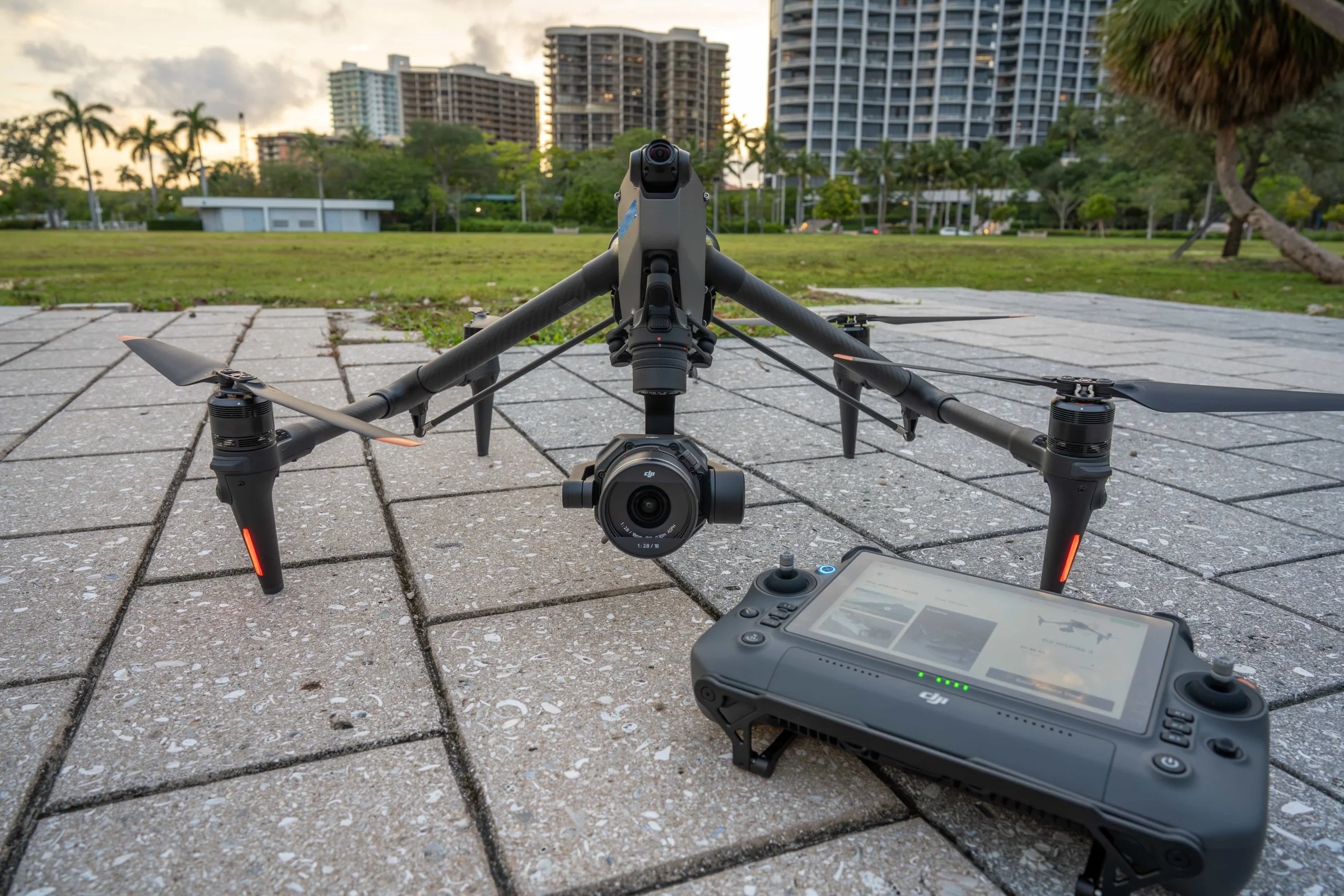
Drone Genius scopes Inspire 3 and FPV packages around the brief. Confirm the aircraft, lens, recording format and post-production workflow for your shoot.
6. Offering Real-Time Monitoring and Feedback
A live camera feed can help the director or cinematographer assess framing during capture. Confirm the monitoring setup, range and communications needs in pre-production.
Monitoring supports on-set decisions, but the aerial team still needs a clear shot brief and a defined process for takes, playback and adjustments.
7. Supporting Post-Production Innovations
Agree on recording format, color settings, frame rate and the file handoff before capture. VFX or stabilization requirements can affect framing and camera settings.
Specify whether delivery includes original footage, selected clips or edited material. Processing, sound, revisions and delivery timing should be agreed in the project scope.