

Exploring the World of Aerial Cinema
Aerial cinema is most useful when the camera move has a clear purpose: establish a location, reveal a subject or connect one part of a scene to another. Planning those images with the director and editor helps the aerial material fit the finished film.
Start with the role of the shot
A wide view can establish where a scene takes place. A reveal can introduce a building or subject gradually. A moving aerial can connect spaces that would be difficult to explain in a single ground-level frame.
Describe what the audience should see at the beginning and end of the shot. References, a storyboard or a short shot description are more useful than asking for a cinematic look without explaining the scene.
Choose the camera movement before the package
A stabilized aerial and an FPV route offer different ways to move through a location. Match the choice to framing, pace, available space and the intended edit. Confirm the camera package and recording requirements with the aerial team.
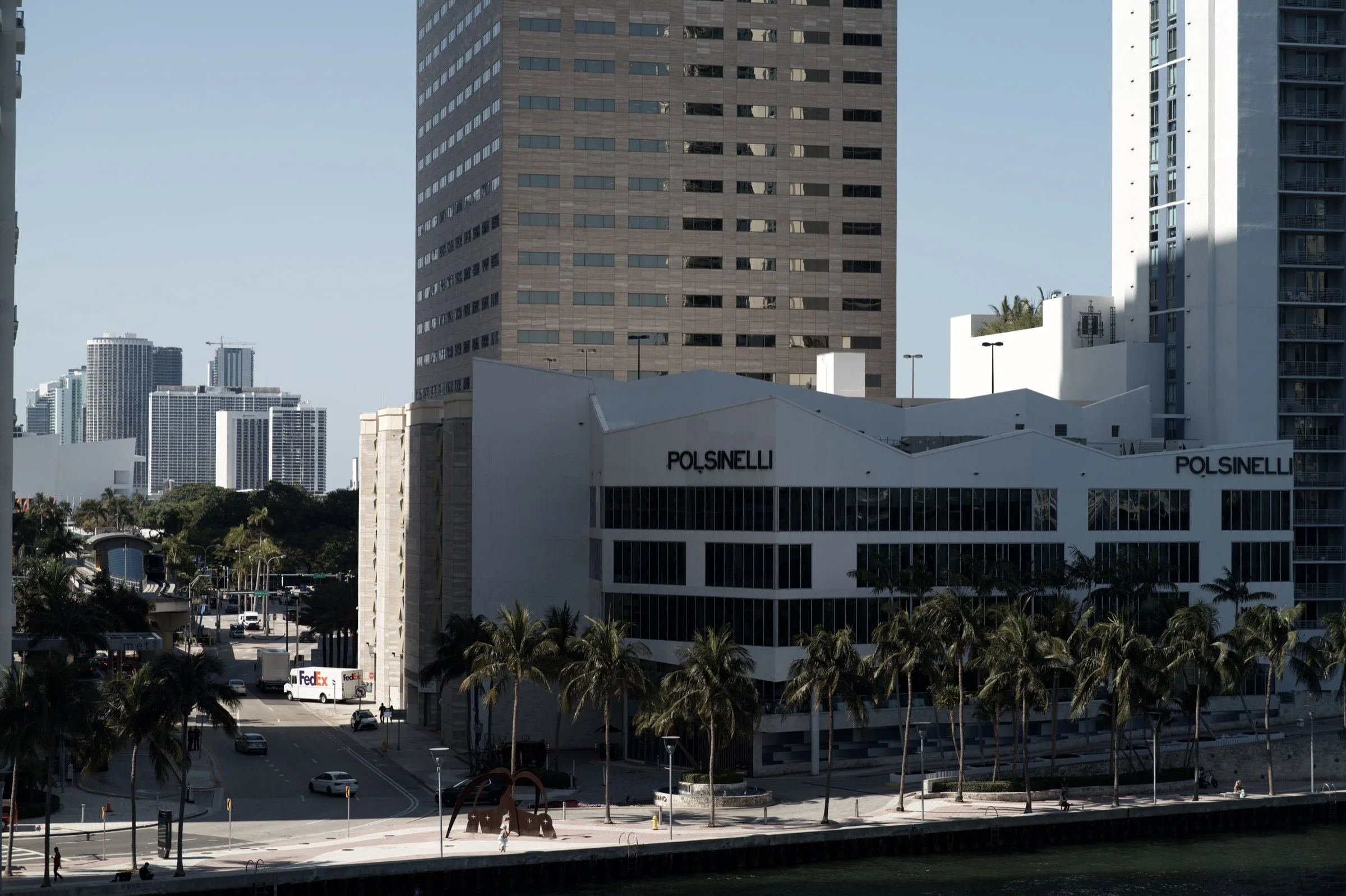
The image above is Drone Genius aerial photography of the Polsinelli building beside the Miami River. It illustrates how an elevated viewpoint can place a building within its surrounding streets and waterfront.
Coordinate with the rest of production
Share the call sheet, shot priorities and relevant ground-camera coverage. Discuss who communicates with the pilot, who reviews the image and how changes to the shot are agreed.
If talent, vehicles or other moving subjects are involved, the proposed operation needs a specific assessment and production coordination. Neither a small aircraft nor a particular camera mode establishes that a requested move is appropriate.
Plan for the location and delivery
Check flight feasibility, site access, weather and any required permissions or authorizations before confirming the capture plan. Allow for alternatives when conditions or site activity change.
Agree on the recording format, framing requirements, file handoff and delivery schedule. Edited material, original footage, live feeds and social cutdowns are different deliverables and should be scoped clearly.
Review relevant work
Our Art Basel Miami Beach relationship began with an FPV tour and grew over successive years into recurring FPV, exterior aerials, event coverage and broader production responsibilities.
Explore film and commercial aerial production and our aerial DP production guide for related work and planning considerations.
Send the location, dates and shot references to discuss a production scope with Drone Genius.