

How Drone Technology Supports Professional Aerial Production
For a production team, drone technology matters when it supports the required image, camera move and delivery workflow. Camera systems, control options and planning tools have expanded what aerial crews can offer. Choosing the right package still starts with the brief, not a list of headline specifications.
Camera capability must fit the edit
Resolution is one part of the decision. Discuss the lens, framing, recording format, frame rate and post-production requirements with the aerial team before selecting a package. Confirm any required licenses, media and accessories as part of the scope.
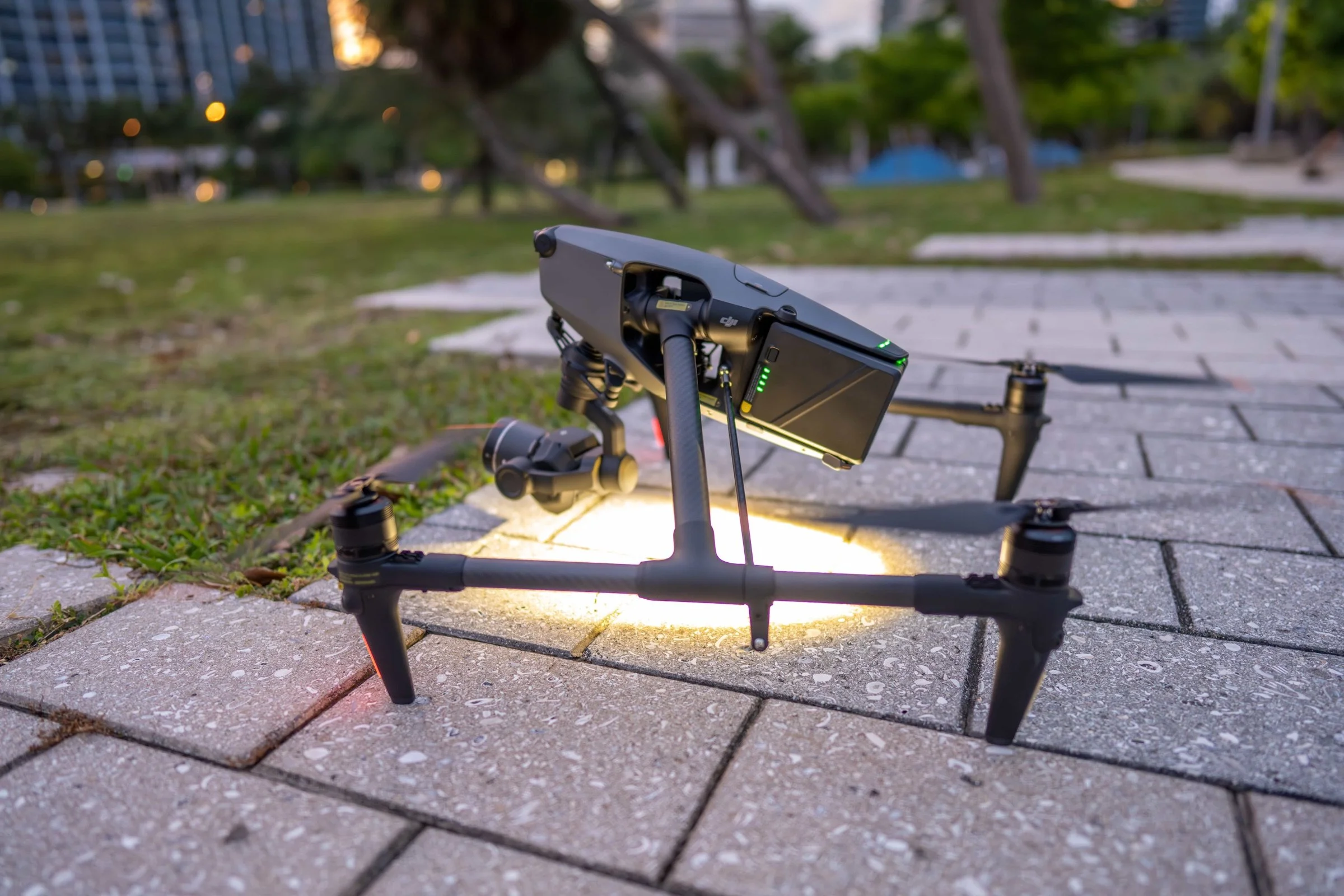
For example, DJI documents a full-frame camera and dual-control operation for Inspire 3. Those are equipment capabilities, not a promise that every production needs the same settings or crew configuration. See our Inspire 3 production page for the service context.
Camera movement and crew coordination work together
A stabilized aerial reveal and an FPV route serve different creative purposes. Describe the start and end frames, movement, speed and subject, then assess the aircraft and crew needed to execute that shot.
Agree on who directs the move, operates the camera, reviews the image and communicates changes. Automation or tracking features should be evaluated for the particular scene, with an appropriate operating plan.
Useful imagery depends on capture requirements
For architectural visualization, the rendering team may need specific viewpoints and matching capture information. Agree on those requirements before the flight. Drone Genius contributes aerial and backplate photography; the rendering studio produces the final visualization.
For construction documentation, define the viewpoints, visit frequency and delivery format. Photography can record visible progress, but it should not be described as a certified survey or engineering assessment unless that separate scope and qualification are established.
Explore backplate photography and 360 views or construction progress documentation.
Equipment features do not remove operating limits
Weather, people, obstacles, site access, battery planning and airspace remain part of the assessment. A published flight-time or sensing specification does not establish the feasibility of a particular operation.
The crew should confirm the proposed plan and any required permissions or authorizations. If conditions or the brief change, the plan may need to change too.
Choose the package around your project
Send the location, dates, shot references, intended use and delivery requirements. Include any needs from the director, editor or visualization studio so they can be considered together.
Share your brief with Drone Genius to discuss an appropriate aerial production scope.